
There is a familiar sound in many CSSDs. The phone rings. Theatre is chasing a loan kit. The vendor says it was delivered. Nobody can quite remember when it arrived. And somewhere in the department, a technician is trying to work out how to fit another complex orthopaedic tray into an already busy processing schedule.
Welcome to loan kit management.
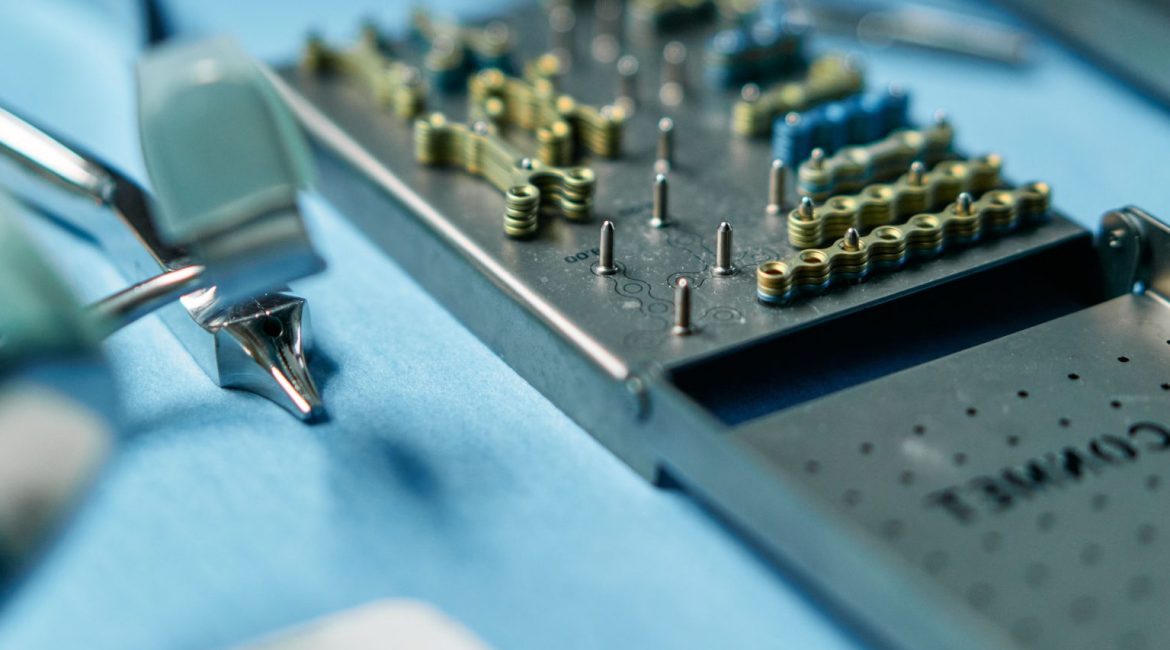
Loan kits, the instruments temporarily supplied by external vendors for specific surgical procedures, are an essential part of modern surgical services. They provide access to specialised instrumentation without hospitals having to purchase and maintain every possible instrument set.
But they also introduce a rather inconvenient problem: the CSSD is often left managing the consequences of someone else’s delivery schedule.
The Last-Minute Scramble
Loan trays are not quite like the hospital’s own instrument inventory. They arrive from different suppliers, often with different configurations, processing requirements and documentation. Some are familiar, others may be completely new to the department.
And they all have one thing in common: they need to be properly processed before they can be used.
A kit arriving at the loading dock shortly before a scheduled procedure doesn’t magically become sterile because a surgeon is expecting it.
The CSSD still needs time to receive the instruments, verify the contents, inspect their condition, review the manufacturer’s instructions for use (IFU), decontaminate, inspect, assemble, package and sterilise them.
The Australian National Health and Medical Research Council (NHMRC) makes it clear that loan sets must undergo routine cleaning and sterilisation by the receiving healthcare facility before use. Previous processing claims are not a substitute for this requirement.
For departments already managing high-throughput surgical schedules, an unexpected delivery can create considerable pressure.
A complex orthopaedic set might require additional inspection, unfamiliar assembly techniques or specific processing requirements. If something is missing, damaged or incorrectly documented, the clock keeps ticking while the CSSD tries to resolve the problem.
And suddenly, what should have been a straightforward surgical case becomes a logistical exercise.
Where Did That Tray Come From?
One of the biggest challenges with loan kit instrumentation is maintaining visibility.
When did the trays actually arrive? Who delivered them? Was the inventory checked? Were any instruments missing or damaged? Has it been through decontamination? Is it waiting for inspection, packing or sterilisation?
If the answers are spread across paper delivery dockets, spreadsheets, handwritten notes and conversations between departments, getting an accurate picture can be surprisingly difficult.
The problem becomes even more complicated when multiple vendors are supplying instruments for different procedures across several theatres.
Without a consistent tracking process, staff can spend valuable time chasing information rather than processing instruments.
This is where digital tracking makes a difference.

Enter MaQS: From Delivery to Theatre
MaQS provides hospitals with a digital way to manage and track loan kit instrumentation throughout its journey through the CSSD.
Rather than relying on a collection of paper records and verbal updates, loan trays can be tracked through their arrival, processing and storage workflows.
Consider a complex orthopaedic loan kit arriving for a scheduled procedure.
- Arrival and Registration
The journey starts when the vendor delivers the trays.
The arrival is recorded in MaQS, creating a digital record of the incoming loan kit. Relevant details can be captured, including the supplier, surgeon and intended procedure. Each individual tray within the loan kit is then assigned a unique tracking barcode, allowing it to be identified and tracked throughout its journey through the CSSD and into theatre.
- Inspection and Decontamination
The trays move into the CSSD workflow.
Staff can verify the supplied inventory, identify any missing or damaged instruments and ensure the required processing documentation is available.
Each tray then progresses through the appropriate decontamination and inspection processes, with its processing history digitally recorded in MaQS using its assigned tracking barcode. This provides a clear record of the tray’s progress and processing status at each stage.
- Packing and Sterilisation
Once inspection is complete, the tray can move through packing and sterilisation.
MaQS provides digital traceability of the instruments and their associated processing records, including sterilisation batch information.
- Storage and Theatre Readiness
Once successfully processed, the trays can be tracked through storage and their subsequent movement into theatre.
Instead of relying on someone remembering where a tray was last placed, staff have access to its digital tracking history.
This provides better visibility of loan instrumentation, more organised workflows and fewer last-minute surprises.
- Individual Tray Tracking and Patient Traceability
Here’s where things get particularly important from a patient safety perspective.
A loan kit can contain multiple individual trays, each with its own unique identification code. Using the unique code on each loan tray tag, MaQS can individually track these trays and link their processing and usage history to the relevant patient records.
This means hospitals can establish exactly which trays were used for a particular procedure and which patients they were associated with.
Why does this matter? Recalls.
If a processing issue, instrument defect or other safety concern arises, hospitals need to identify which patients may have been affected. Without individual tray-to-patient traceability, this can involve manually reviewing records, chasing paperwork and spending hours trying to establish where instruments were used.
With MaQS, this information can be retrieved digitally, helping hospitals identify affected patient records more efficiently and significantly reducing the time and resources required to investigate a recall.
Because when it comes to patient safety, knowing exactly where an instrument has been is just as important as knowing where it’s going.
The result? A complete digital journey from vendor delivery through to patient use, with greater visibility, accountability and traceability at every stage.

Holding Vendors Accountable
Now let’s talk about the other half of the equation.
Hospitals have responsibilities when receiving and processing loan instrumentation. But vendors also have responsibilities when supplying it.
Late deliveries, incomplete inventories, damaged instruments and missing processing documentation can all create additional work for CSSD teams.
Yet how often are these issues properly recorded?
If a vendor regularly delivers trays late, it is difficult to demonstrate a pattern when the only evidence is a few frustrated conversations and someone’s handwritten notes.
Digital tracking changes that.
By maintaining a record of loan kit arrivals, hospitals can establish exactly when instrumentation was received and compare delivery times against their agreed requirements.
Over time, this information can help identify:
- Vendors who regularly deliver trays outside the required timeframe.
- Incomplete or inaccurate instrument inventories.
- Missing or inadequate manufacturer processing instructions.
- Instruments arriving damaged or in unsuitable condition.
- Recurring issues that create additional work for CSSD staff.
This isn’t about creating unnecessary conflict with suppliers. Most vendor representatives are working within busy schedules themselves.
It’s about establishing clear expectations and having the information available to support meaningful conversations when those expectations aren’t being met.
If a hospital has agreed that loan trays must arrive 48 hours before surgery, it should be possible to demonstrate whether that requirement is being met.
And if a particular supplier consistently misses the deadline, there is now something more useful than a complaint to take to the next vendor meeting.
Data.
The Bigger Picture: Protecting Theatre Efficiency
Loan tray management isn’t just a CSSD issue.
When a tray arrives late, is incomplete or cannot be processed within the available timeframe, the consequences can extend well beyond the department.
Theatre schedules may be disrupted, staff may need to reorganise their workload, and surgical procedures can potentially be delayed or cancelled.
In high-throughput surgical environments, even small disruptions can have a significant operational impact.
Having visibility of loan instrumentation allows CSSD teams and hospital management to identify potential problems earlier, communicate more effectively with theatre and make better-informed decisions about processing capacity.
It also creates an opportunity to review vendor performance using actual operational data rather than relying on anecdotal feedback.
Stop Managing Loan Trays by Memory
Loan instrumentation is an important part of modern healthcare, and it isn’t going away anytime soon.
But managing it shouldn’t require a collection of spreadsheets, delivery dockets, phone calls and an exceptionally good memory.
With MaQS, hospitals can bring loan kit instrumentation into their digital tracking environment, providing greater visibility of tray movements and processing history while supporting accountability across the supply chain.
Because the CSSD already has enough to worry about without having to become a courier tracking service as well.
The vendor supplies the instruments. The CSSD makes them safe for use. MaQS helps make sure the journey in between is properly tracked.